
The Keys to consistent performance are built on following a plan
A successful run begins with a solid stage plan. Stage planning is the process of deciding how you will engage the targets before the timer sounds. In Steel Challenge, you will engage five steel targets on every string, with the designated stop plate always left for the final shot.
While the rules define what must be shot and when the stop plate is engaged, they do not prescribe the best way to shoot the stage. Every competitor develops a plan that complements their skills, vision, and movement. By comparing your times, analyzing your consistency, and making small adjustments, you'll discover the stage plan that works best for you.
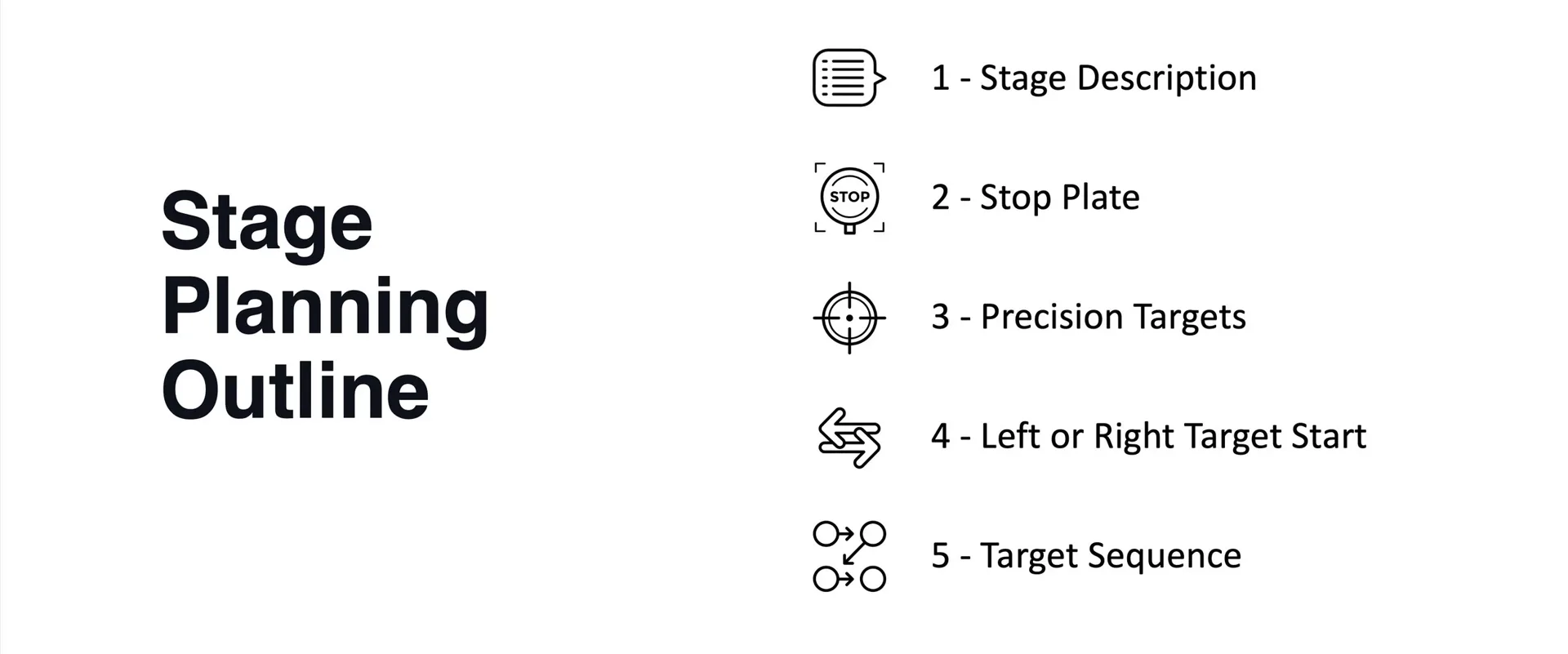
Creating Your Plan
There are a few simple things to consider as you determine your stage plan.
Read and understand the Stage description
Locate the Stop Plate
Decide which target(s) will require the most precision to ensure you score on the first shot
Decide if you like shooting left-to-right or right-to-left
Determine the target sequence that allows you to be the most accurate at speed
1: Stage Description
Each stage will have a description that includes the name of the stage, where to start, how to engage, and the number of strings used for scoring. You must read and understand how each stage works, so you are ready to go when it is your turn to compete.
2: Stop Plate
When you look at any stage, the Stop Plate should be clear. It will be designated by a different colored post or plate color. You want to understand where you will finish each stage with your final shot.
3: Precision Targets
The targets that require the most precision may be different for each competitor. It may be the farthest target from you, or it may be the smallest target, or both. Just decide as you make your plan and know which targets will need the most precision and control to ensure you hit them on the first shot.
4: Left or Right Target Start
As you look at each stage, decide if you will start with a target on the left or the right. Some people like shooting left-to-right, and others prefer right-to-left. Use a timer to see which way works better for you. You want to avoid large swings as you transition to the next target. Starting from a target on the outside will help to narrow the distance of your remaining transitions.
5: Target Sequence
You are looking for the sequence that allows you to be the most accurate at speed. The shortest distance between two points is a straight line, so pick a target order that keeps things simple. Swinging back and forth across targets will only increase your time and make it harder to be accurate. There are many ways to shoot a stage, so you will want to test and see what works best for you.
Frequently Asked Questions
How many targets are in a Steel Challenge stage?
Every Steel Challenge stage has five targets and one is the designated stop plate. The stop plate is your last shot on each string, and it is marked by a different colored post or plate.
Is there one correct way to shoot a stage?
No. There is no single way to shoot any stage. The best plan is the one that gives you the most accuracy at speed, and you use your times and results to find what works best for you.
What is a stage plan and why do you need one?
A stage plan is your decision about how you will shoot a particular stage, including your target order and where you finish. Planning ahead builds the consistency that steady performance depends on.
How do you choose your target sequence?
Pick an order that keeps movement simple and avoids large swings between targets. The shortest distance between two points is a straight line, so starting from an outside target helps narrow your remaining transitions and keeps you accurate at speed.
Which targets should you plan to shoot most carefully?
Identify the targets that need the most precision, often the farthest or the smallest, or both. Knowing these in advance lets you control those shots and score on the first hit rather than making up a miss.