
A Guide to Safe Shooting Angles and Mastering Muzzle Control
Whether you’re new to the sport or a seasoned competitor, understanding and respecting the 180 Rule is critical. This foundational safety principle ensures that everyone on the range - shooters, officials, and spectators - stays safe. In practical shooting sports like USPSA and Steel Challenge, a single misstep can result in a match disqualification (DQ). This guide will help you avoid that outcome by mastering safe muzzle awareness from every angle.
What is the 180 Rule?
The 180 Rule defines an invisible, 180-degree line that follows your body, dividing what’s considered “safe” from “unsafe.” As you move, this 180-degree plane moves with you.
Any time your muzzle breaks that uprange boundary (toward the rear 180°), it’s a DQ.
The firearm must always stay pointed downrange or within the safe zone defined by the stage designers and range officials.
Why the 180 Rule Matters
Violating the 180 Rule isn’t just about scoring - it’s about safety. Even an unloaded firearm, when pointed uprange, can create panic or dangerous habits. Strict adherence to this rule maintains trust and safety across everyone on the range.
Common Scenarios That Risk a 180 Violation
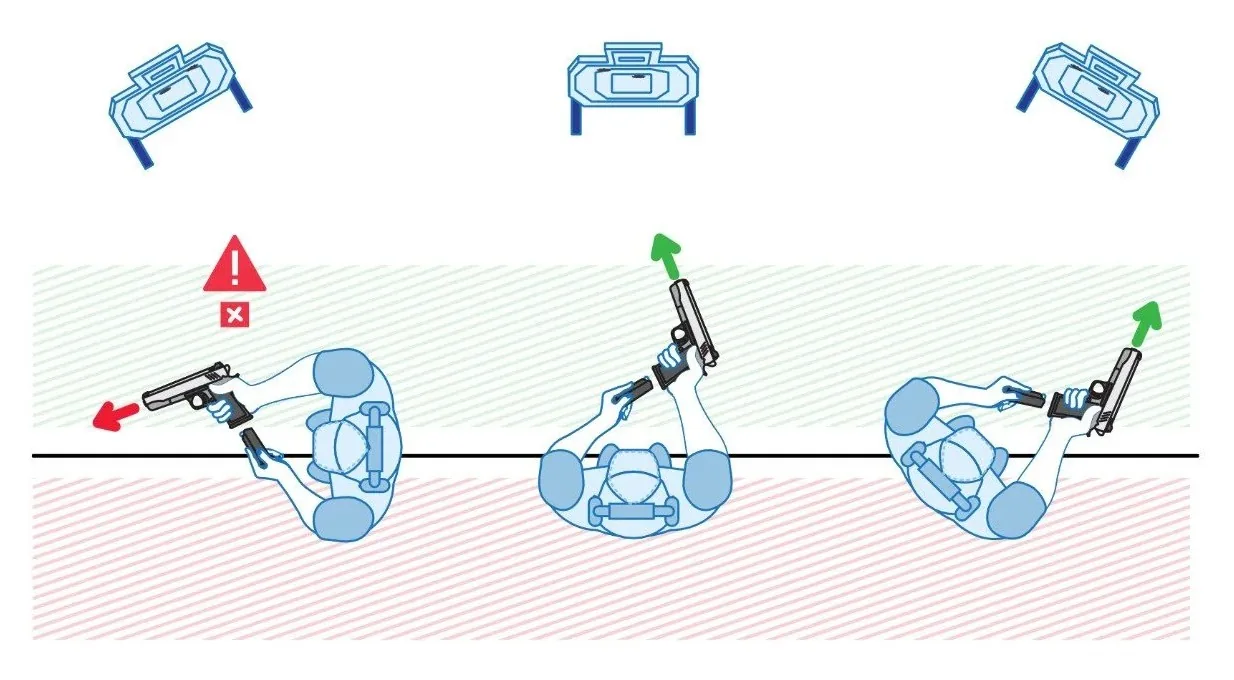
Reloading While Moving
As you reload during lateral movement, your muzzle may swing past 90 degrees if you’re not intentional with your form. Practice keeping the muzzle pointed down range during reloads.
Overrunning a Target
If you move past a target and then try to turn back to engage it, your muzzle may unintentionally swing uprange. Always think ahead - plan your shooting order to score on targets before passing them.
Facing Uprange at the Start
Some stages start with your back to the targets. Drawing before turning downrange is a guaranteed DQ. Be sure to fully rotate your body toward the targets before drawing your firearm so the muzzle is always pointed down range.
Moving Uprange
If you need to retreat or back up during a stage, always remember to be intentional and keep the firearm pointed down range and in a safe direction.
180 Rule FAQ
What is the 180 rule in USPSA?
The 180 rule is a safety boundary defined by an invisible 180-degree line running across your body, separating the safe downrange area from the unsafe uprange area. Your muzzle must always stay on the downrange side of that line, and as you move through a stage the 180-degree plane moves with you.
What happens if you break the 180 rule?
Breaking the 180 rule is a match disqualification. Any time your muzzle points past the 180-degree line toward the uprange side, even for an instant, the range officer will stop you and your day is over, no matter how well you were shooting.
What commonly causes shooters to break the 180?
The most common causes are swinging the muzzle too far during reloads while moving laterally, turning back to engage a target you have already passed, drawing before you have fully turned downrange on a start with your back to the targets, and backing up without keeping the muzzle downrange.
How do you avoid a 180 DQ?
Keep the muzzle pointed downrange at all times, especially during movement and reloads, and plan your stage so you never have to turn back toward a target behind you. Being deliberate about muzzle direction on every step, retreat, and reload is what keeps you safely inside the 180.
Does the 180 rule apply in Steel Challenge too?
Yes. The 180 rule is a core safety principle across practical shooting sports, including both USPSA and Steel Challenge. Breaking it is a disqualification in either sport, so the same muzzle awareness applies wherever you compete.