
Do you know which eye you rely on the most when shooting?
It’s a very important detail. Your dominant eye is the eye your brain instinctively trusts to process visual information - even if it isn’t your strongest one visually. Understanding eye dominance helps you establish a faster, more accurate sight picture, especially under pressure.
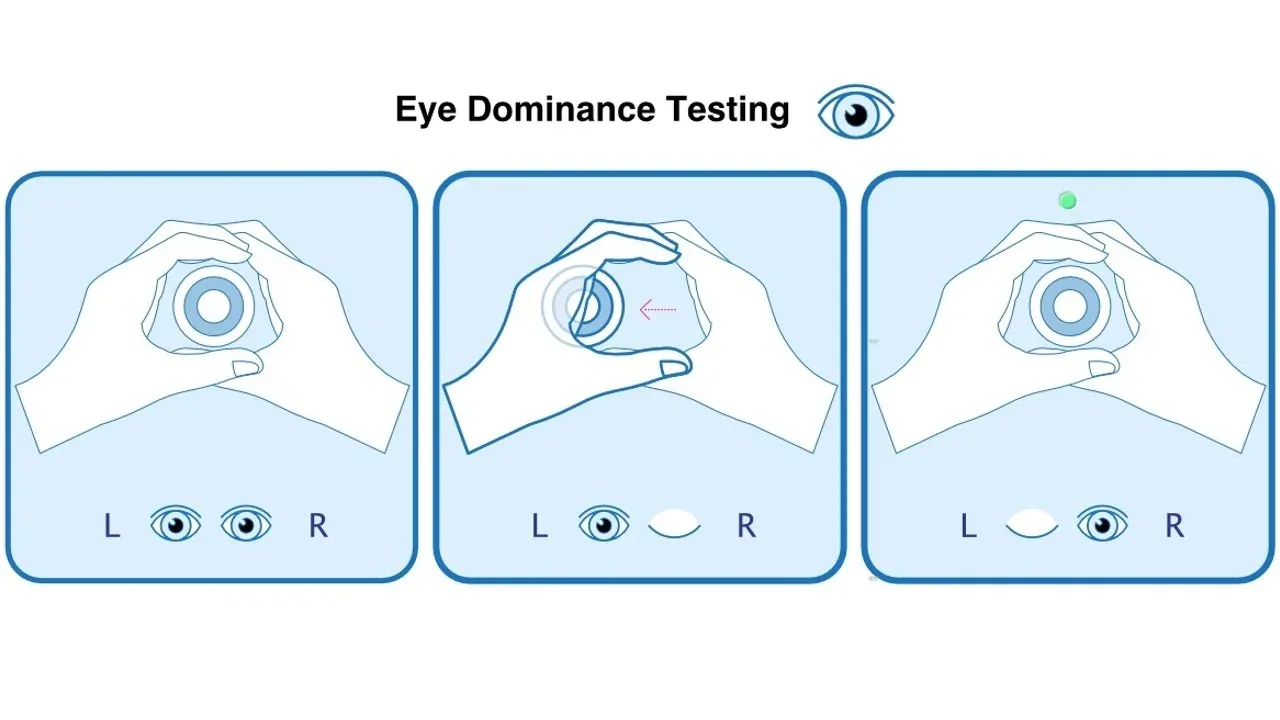
What is eye dominance, and how is it defined?
Your dominant eye is the eye your brain prefers for processing sight information. You need to know which eye your brain prefers so you can position the gun’s sights for your dominant eye. Sight alignment usually happens unconsciously without much thought, as your brain already knows which eye it trusts. Eye dominance is not the same thing as better vision. Your dominant eye may not be the sharpest one. Eye dominance is all about brain preference, not eyesight quality.
Why do we need to know which eye the brain trusts?
Because it will help you and your brain be more accurate and consistent at speed. Your Dominant eye will give you the most precise alignment with sights and enhance shot accuracy.
Why Eye Dominance Matters in Shooting Competition
-
Quick Target Acquisition: When your dominant eye directs alignment, you create a mental shortcut - your body doesn’t pause to resolve or process the input.
-
Improved Sight Alignment: Once your dominant eye takes the lead, lining up the sights becomes instinctive - keeping shots on target even when firing quickly.
-
Vision Compatibility with Your (R/L) Handedness: Most shooters are “cross-dominated” - for instance, right-handed but left-eye dominant. Identifying this can guide stance and sight adjustments.
Your Dominant Eye and how to test for it
Most people have a dominant eye that is the same as their dominant hand. Two-thirds of the population are right-eye dominant, and one-third are left-eye dominant. A few people have no eye dominance, so you will want to check and understand which type you are. Many people are not aware they have a dominant eye until they are tested.
Eye Dominance Test
-
Pick an object that is around seven yards away and about the size of a doorknob or light switch.
-
Bring both hands up and form a triangle window that frames the object.
-
With both eyes open, extend your arms, keeping the object or target centered inside the triangle window.
-
Next, close each eye, one at a time, and hold your triangle window in the same position without moving it.
-
Start by closing your left eye and noting what you see.
-
Then open your left eye and close your right eye, noting what you see.
Whatever open eye you saw the object framed inside your hands is the one your brain trusts the most. This would be your dominant eye.
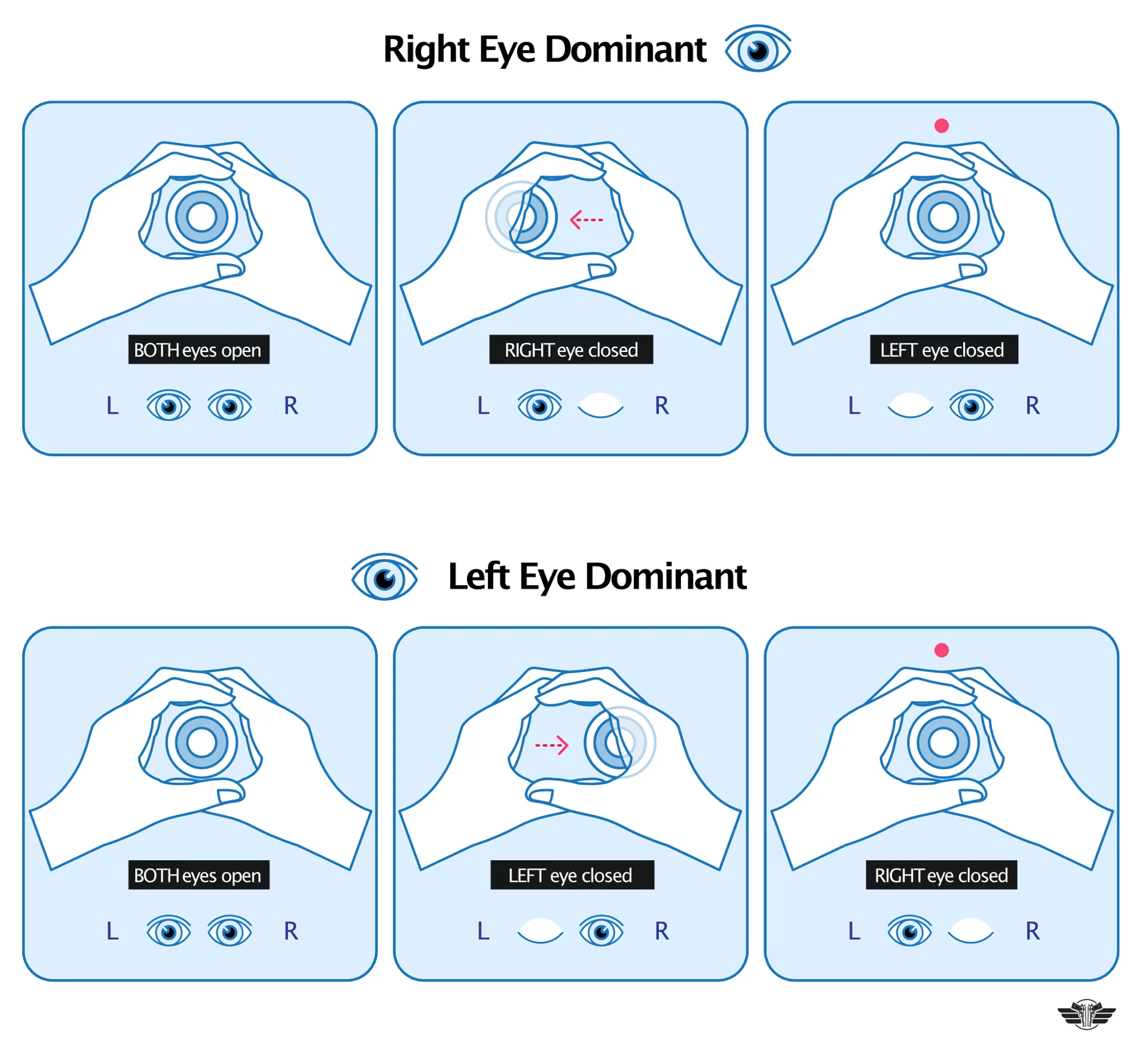
You can do these tests under different conditions and at different distances to see what your brain prefers so that when you mount your gun and form a sight picture, you can do it quickly and accurately.
Tips for Vision Training
-
Dry Fire with Intent: Use dry-fire sessions to reinforce sight alignment with your dominant eye - especially helpful if you’re adjusting for cross-dominance.
-
Try Eye Patches or Tape: In training, consider taping over your non-dominant eye to force your dominant eye to lead the alignment.
-
Retest Occasionally: Vision and dominance can shift over time. Recheck your dominance periodically, especially after vision changes or injuries.
Why it all Matters
Knowing your dominant eye gives you an advantage in precision, especially under competitive pressure. It informs better training habits, smarter gear choices, and the quickest path to confident, fast sight pictures. Whether you’re aiming to shave fractions off your stage times or improve consistency from stage to stage, this simple test will help you instinctively get there faster.
Eye Dominance FAQ
What is eye dominance?
Eye dominance is the eye your brain instinctively trusts to process visual information, and it is not the same as which eye has sharper vision. Your dominant eye gives you the most precise alignment with your sights, which is why knowing it helps you build a faster, more accurate sight picture.
How do you test for a dominant eye?
Pick an object about seven yards away, roughly the size of a doorknob. With both eyes open, extend your arms and form a small triangle window with your hands that frames the object. Close one eye at a time without moving your hands, and the open eye that still sees the object centered in the window is your dominant eye.
Is your dominant eye always the same as your dominant hand?
Usually, but not always. Most people have a dominant eye on the same side as their dominant hand, but some are cross-dominant, meaning the dominant eye is on the opposite side. A small number of people have no strong eye dominance at all, which is why it is worth testing rather than assuming.
How common is right-eye versus left-eye dominance?
About two-thirds of people are right-eye dominant and roughly one-third are left-eye dominant. A few people have no clear dominance, so testing is the only reliable way to know which group you fall into.
Why does eye dominance matter for competition shooting?
Your dominant eye delivers the most precise sight alignment, so aiming with it lets you find the sights faster and shoot more consistently under pressure. Knowing which eye your brain trusts also guides smarter training habits and gear choices, and it shortens the path to a confident, quick sight picture.